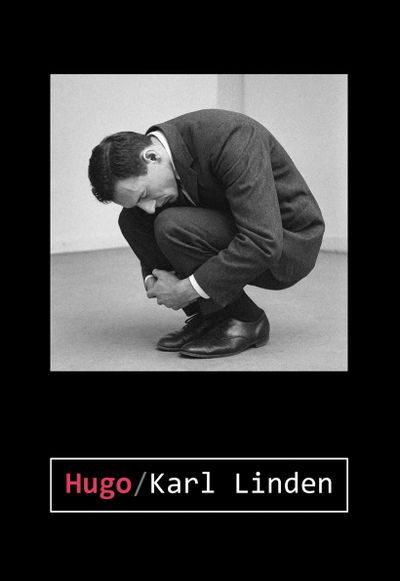
The Work
Hugo- Karl Linden / Literary Fiction
Hugo — A Literary Analysis
At its core, Hugo is a novel about the instability of identity under pressure—historical, psychological, and existential. Set against the muted tensions of the late 1950s, it follows a man who believes himself to be an observer of events, only to discover, gradually and incompletely, that he is implicated in forces he neither understands nor controls.
Identity as Performance and Residue
Hugo exists between two selves: his inherited German identity and his adopted American persona. These are not merely cultural markers but competing modes of being. The former clings to him as history—embedded in memory, reflex, and moral unease—while the latter presents itself as a deliberate construction, a means of escape, reinvention, and legitimacy.
Yet the novel resists the idea that identity can be cleanly exchanged. Hugo’s Americanization never fully displaces what precedes it; rather, it overlays it. The result is not synthesis but tension—a life lived in partial translation. His speech, his judgments, even his desires bear the imprint of this unresolved duality.
This instability is mirrored and refracted through other characters. Bepo, protean and elusive, appears as a man without fixed identity, capable of blending seamlessly into any social or moral environment. Where Hugo is divided, Bepo is diffuse. Anna, by contrast, embodies a third condition: one whose origins are constructed, even instrumentalized, yet who insists upon a lived, irreducible selfhood. Her vitality resists reduction, complicating any notion that identity is purely imposed or inherited. Together, these figures form a triadic system: identity as burden, as void, and as defiance.
The Absurd and the Failure of Agency
Running beneath the question of identity is a deeper existential current. Hugo is not blind to the absurdity of his life—particularly in his role as a writer of superficial, often meaningless work. He recognizes the disjunction between appearance and reality, between language and truth. Yet this awareness does not liberate him. Instead, it paralyzes.
His condition is not ignorance but incapacity. He sees, but does not act.
This tension—between lucidity and inertia—places Hugo within a tradition of existential protagonists who confront the emptiness of modern life without achieving transcendence. He is neither heroic nor entirely passive; rather, he oscillates, retreating at the moment when action would require genuine transformation.
Fear of Death and the Erotics of Reassurance
Hugo’s fear of death, though rarely confronted directly, permeates his behavior. It manifests most clearly in his relationships with women, which are driven less by desire than by a need for reassurance. Intimacy becomes a means of affirming existence, a temporary defense against the prospect of annihilation.
This dynamic subtly inverts the expected power relations. Women such as Verena and Anna perceive Hugo’s dependency—his need to be seen, affirmed, stabilized—and respond to it in different ways. Verena engages it strategically, while Anna responds more instinctively, yet both reveal the same underlying truth: Hugo’s desire is not sovereign. It is reactive, even compensatory. Eroticism in the novel is therefore not liberating, but symptomatic—an expression of vulnerability rather than control.
Power, Perspective, and Infantilization
Hugo’s encounters with figures of authority further expose his limitations. In the presence of those who operate with greater clarity or purpose, he appears diminished—uncertain, misaligned, and often naïve. He lacks not intelligence, but proportion. He misjudges scale, confuses proximity with influence, and fails to grasp the broader implications of his actions.
These encounters suggest that Hugo’s immaturity is not merely personal but existential. He inhabits a world whose structures exceed his understanding, and he lacks the interpretive framework to navigate them. As a result, he is easily guided, redirected, and—at times—used, though he rarely apprehends this fully.
Incremental Change and the Question of the Future
The novel resists the consolations of transformation. Hugo does not emerge as a fundamentally altered man. His growth is modest, almost imperceptible—“an inch,” rather than a conversion. He becomes more aware of his limitations, more conscious of the gap between his self-conception and reality, but this awareness does not resolve the tension.
Instead, it reframes it.
The most significant gesture toward the future lies not in Hugo’s professional or moral life, but in the prospect of fatherhood. This stands in quiet contrast to an earlier moment in his life, when he rejected such responsibility. The shift is subtle but meaningful: where once he refused continuity, he now permits it.
This is not redemption. It is an opening.
The child represents neither hope nor resolution, but the possibility of continuation beyond Hugo’s own inadequacies—a future that does not depend on his coherence or success.
Conclusion
Hugo is a restrained and psychologically precise novel that examines what it means to exist within overlapping systems of identity, desire, and power. Its protagonist is not a hero but a witness—one whose vision is partial, whose agency is limited, and whose understanding arrives late, if at all.
In its final movement, the novel offers no grand synthesis. Instead, it leaves us with a recognition both intimate and unsettling: that the narratives by which we understand ourselves—our identities, our ambitions, our sense of control—may be more fragile, and more contingent, than we are prepared to admit.